
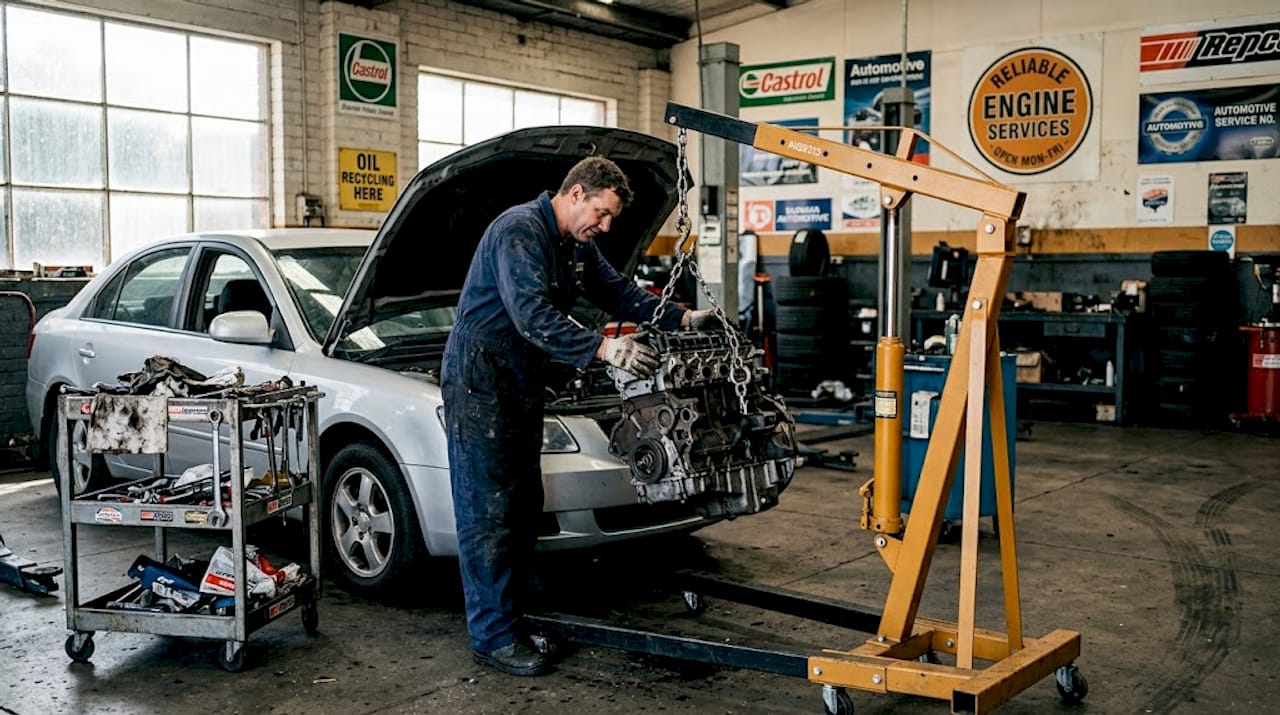
When your Hyundai or Kia throws a rod or seizes up, the gut reaction is to start browsing dealership lots. But why engine replacement beats car buying is a question worth sitting with before you sign anything. A replacement engine typically costs between $4,000 and $7,000. A new car in Australia averages over $49,000. That gap is not a rounding error — it is a financial decision that could save you tens of thousands of dollars, preserve a vehicle you already know and trust, and keep you out of a five-year loan you did not plan for.
Table of Contents
- Comparing costs: engine replacement versus new car purchase
- How depreciation and warranties affect your decision
- Understanding different engine replacement options
- Practical tips for Hyundai and Kia engine replacement in Australia
- Why engine replacement often outshines buying new: expert insights
- Trusted engine replacement solutions for your Hyundai and Kia at Engine Zone
- Frequently asked questions
Key Takeaways
| Point | Details |
|---|---|
| Engine replacement costs less | Replacing your Hyundai or Kia engine costs a fraction of buying a new car, saving thousands upfront. |
| Avoid steep depreciation | New cars lose significant value quickly, while engine replacement extends your current vehicle’s lifespan. |
| Warranty peace of mind | Remanufactured engines offer OEM-level warranties, providing reliable protection without new car prices. |
| Check Australian specifics | Verify class action eligibility and service history for cost-effective warranty coverage in Australia. |
| Get multiple quotes | Labour and part prices vary greatly, so obtain several estimates to make the best financial decision. |
Comparing costs: engine replacement versus new car purchase
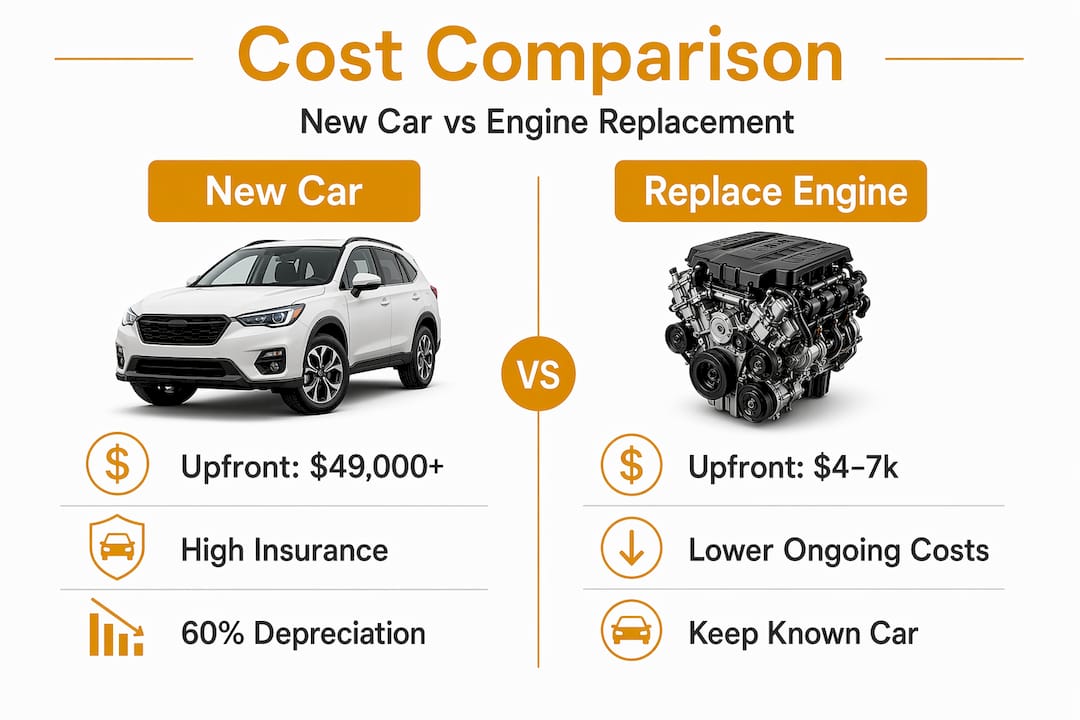
The numbers here are blunt. New car average price sits at $49,275 in Australia, while engine replacement lands between $4,000 and $7,000, making replacement 8 to 12 times cheaper upfront. That is not a marginal saving. That is the difference between financing a depreciating asset for years and paying a one-time repair bill that gets your existing car back on the road.
But the sticker price comparison is only the start. When you buy new, you also absorb higher comprehensive insurance premiums, stamp duty, registration costs, and dealer fees. None of those appear in the headline price. Engine replacement carries none of those extras. You keep your existing registration, your existing insurance bracket, and your existing loan-free status if you already own the car outright.
New cars also depreciate 20% in the first year and up to 60% over five years. An engine replacement, by contrast, can extend your vehicle’s useful life by 100,000 kilometres or more, effectively resetting the mechanical clock without resetting the financial one.
| Cost factor | New car purchase | Engine replacement |
|---|---|---|
| Upfront cost | $49,000+ | $4,000 to $7,000 |
| Depreciation (year one) | 20% loss | Minimal |
| Loan repayments | 5 to 7 years | None |
| Insurance increase | Likely | None |
| Registration/stamp duty | Yes | No |
| Ownership familiarity | Starting fresh | Retained |
The engine replacement advantages become even clearer when you factor in that your existing Hyundai or Kia already has known service history, fitted accessories, and a body you have maintained. You are not starting from scratch.
Pro Tip: Before comparing quotes, calculate your total cost of new car ownership over five years including interest, insurance, and depreciation. Most owners are genuinely surprised how quickly that figure eclipses a quality engine replacement.
Having seen the stark cost contrast, let’s understand how depreciation influences your finances over time.
How depreciation and warranties affect your decision
Depreciation is the silent killer of new car finances. The moment you drive off the lot, that $49,000 vehicle is worth roughly $39,000. By year five, it may be worth less than $20,000. You have paid for something that has lost more than half its value, and you are still paying interest on the original amount.
Engine replacement sidesteps this entirely. Your existing vehicle holds whatever market value it had before the engine failure. Once repaired, it returns to that value, and in some cases exceeds it if the replacement engine is newer or higher specification than the original.
Key financial benefits of engine replacement when it comes to depreciation:
- No immediate value loss on the day of repair
- Preserved trade-in value once the vehicle is running again
- No new loan principal attracting interest over five to seven years
- Lower insurance costs compared to a new vehicle
- Stable registration costs without the stamp duty hit of a new purchase
Warranty coverage is the other major consideration. New cars can lose up to 60% of their value over five years, but remanufactured engines offer 3-year/36,000-mile warranties that provide genuine peace of mind. These are not short-term patch jobs.
Remanufactured engines provide OEM-level performance with comparable warranties at a fraction of the new engine price. OEM stands for Original Equipment Manufacturer, meaning the engine meets the same specifications as the one that came from the factory.
“A remanufactured engine is not a second-hand fix. It is a factory-spec rebuild with full testing, tolerances matched to the original design, and warranty coverage that rivals new parts.”
Pro Tip: Always ask for the warranty document in writing before committing to any engine replacement. Verify whether the warranty covers labour as well as parts, and check the claim process before you need it.
With depreciation and warranty considerations clear, let’s look at the types of engine replacements and what suits your vehicle best.
Understanding different engine replacement options
Not all engine replacements are equal, and choosing the wrong type for your situation is an expensive mistake. There are four main categories, each with a different cost profile, quality level, and risk factor.
New engines cost $4,000 to $10,000, remanufactured engines offer OEM specs and a 3-year warranty, used engines are the cheapest option but carry high risk and short warranty coverage, and rebuilt engines sit somewhere in the middle with variable quality depending on the repairer.

| Engine type | Typical cost | Warranty | Quality assurance | Best suited for |
|---|---|---|---|---|
| New (crate) engine | $4,000 to $10,000 | 3 to 5 years | Highest | Long-term ownership |
| Remanufactured | $2,500 to $6,000 | 3 years typical | High, OEM-spec | Best value balance |
| Rebuilt | $1,500 to $4,000 | Variable | Medium, shop-dependent | Tight budgets |
| Used (second-hand) | $500 to $2,500 | Minimal | Unknown | Short-term fix only |
Remanufactured engines achieve OEM-level standards through rigorous testing and full warranty coverage, whereas rebuilt engines only replace worn parts with quality that varies significantly between workshops. For Hyundai and Kia owners who plan to keep their vehicle for several more years, remanufactured is almost always the smarter call.
Before choosing your engine type, work through these steps:
- Assess your vehicle’s current market value. If the car is worth $8,000 running and the engine replacement costs $5,000, the maths works in your favour.
- Set a realistic budget that includes labour, ancillary parts, and any core charges (more on those shortly).
- Decide how long you plan to keep the vehicle. A three-year plan justifies a remanufactured engine. A six-month plan might not.
- Check the vehicle’s overall condition. An engine replacement makes less sense if the transmission, suspension, or body are also failing.
- Get fitment confirmation before purchasing. Not every engine suits every model year, even within the same nameplate.
You can explore Hyundai and Kia engine options to understand what is available for your specific model before committing to a quote.
Pro Tip: Remanufactured engines offer the best balance of warranty, quality, and cost for most Hyundai and Kia owners. Unless your budget is extremely tight, avoid used engines from unknown sources.
With options understood, let’s consider important factors unique to Hyundai and Kia vehicles for engine replacement success.
Practical tips for Hyundai and Kia engine replacement in Australia
There are several costs and considerations that catch owners off guard when they start the engine replacement process. Knowing them upfront saves money and frustration.
The first is the core charge. Core charges range from $500 to $1,500 if you do not return your old engine to the supplier, and ancillary parts such as gaskets, seals, and belts can add another $200 to $500 on top of the engine price. These are legitimate costs, but they are rarely mentioned in the initial quote.
Practical steps to protect yourself during the replacement process:
- Always return your old engine to avoid the core charge. Most suppliers require it within 30 days.
- Ask for an itemised quote that includes labour, ancillary parts, and any potential core charges before authorising work.
- Get at least three quotes from different workshops. Labour rates vary dramatically, and some shops quote high to discourage the job.
- Keep detailed service records for your vehicle. These are essential if you need to make a warranty claim on the replacement engine.
- Check your eligibility for class action claims before spending money out of pocket.
That last point is particularly important for Australian Hyundai and Kia owners. Engine defects affecting approximately 194,000 Hyundai and Kia vehicles in Australia have been the subject of class action proceedings. If your engine failure relates to a known defect, you may be entitled to compensation or a free repair rather than paying $5,000 or more out of pocket.
Checking your eligibility takes minutes and could save you the entire cost of the replacement. Do this before you authorise any repair work.
You can also review engine replacement options for Kia Rio and other popular models to understand pricing before approaching workshops, so you arrive informed rather than dependent on a single quote.
Pro Tip: Remanufactured engines typically offer the strongest warranty and the most predictable performance. If your budget allows, they are almost always worth the premium over rebuilt or used alternatives.
Equipped with practical know-how, next we’ll reflect on why sticking with engine replacement is often the smarter choice for Hyundai and Kia owners.
Why engine replacement often outshines buying new: expert insights
Here is the view that most financial advice misses. The conversation around engine replacement versus buying new gets framed as a purely mechanical question, when it is actually a financial behaviour question. Buying a new car feels decisive. It feels like progress. Engine replacement feels like settling. That emotional framing costs Australian car owners billions of dollars every year.
Experts recommend engine replacement when the post-repair value of the vehicle exceeds the cost of repair, and this threshold is met far more often than most owners realise. A Hyundai i30 or Kia Cerato worth $12,000 in good condition, repaired for $5,500, is a straightforward financial win. The same owner financing a $49,000 new vehicle at 7% interest over five years pays nearly $60,000 in total. The engine replacement savings are not marginal. They are transformative.
There is also the familiarity argument, which is underrated. You know your existing vehicle. You know its quirks, its service history, and its condition. A new car is an unknown quantity. That knowledge has genuine value, particularly when it comes to avoiding unexpected repair costs in the first two years of ownership.
Remanufactured engines give OEM performance and warranty coverage at a fraction of the cost of a new engine, which means the reliability concern that pushes people toward new cars is largely addressed. You are not gambling on a worn-out part. You are installing a factory-spec engine with documented testing behind it.
The sustainability angle is also worth naming. Manufacturing a new car generates significant carbon emissions and resource consumption. Replacing an engine extends the life of an existing vehicle, which is a meaningfully lower environmental footprint. Financial prudence and environmental responsibility point in the same direction here.
The owners who regret engine replacement are almost always the ones who chose the cheapest possible option without checking warranty terms, or who replaced an engine in a vehicle with multiple other serious faults. The decision is not always right. But when the vehicle is otherwise sound, the case for replacement over purchase is very strong.
Trusted engine replacement solutions for your Hyundai and Kia at Engine Zone
If you have worked through the numbers and decided engine replacement is the right move, the next step is sourcing a quality engine with genuine warranty coverage and fitment support.
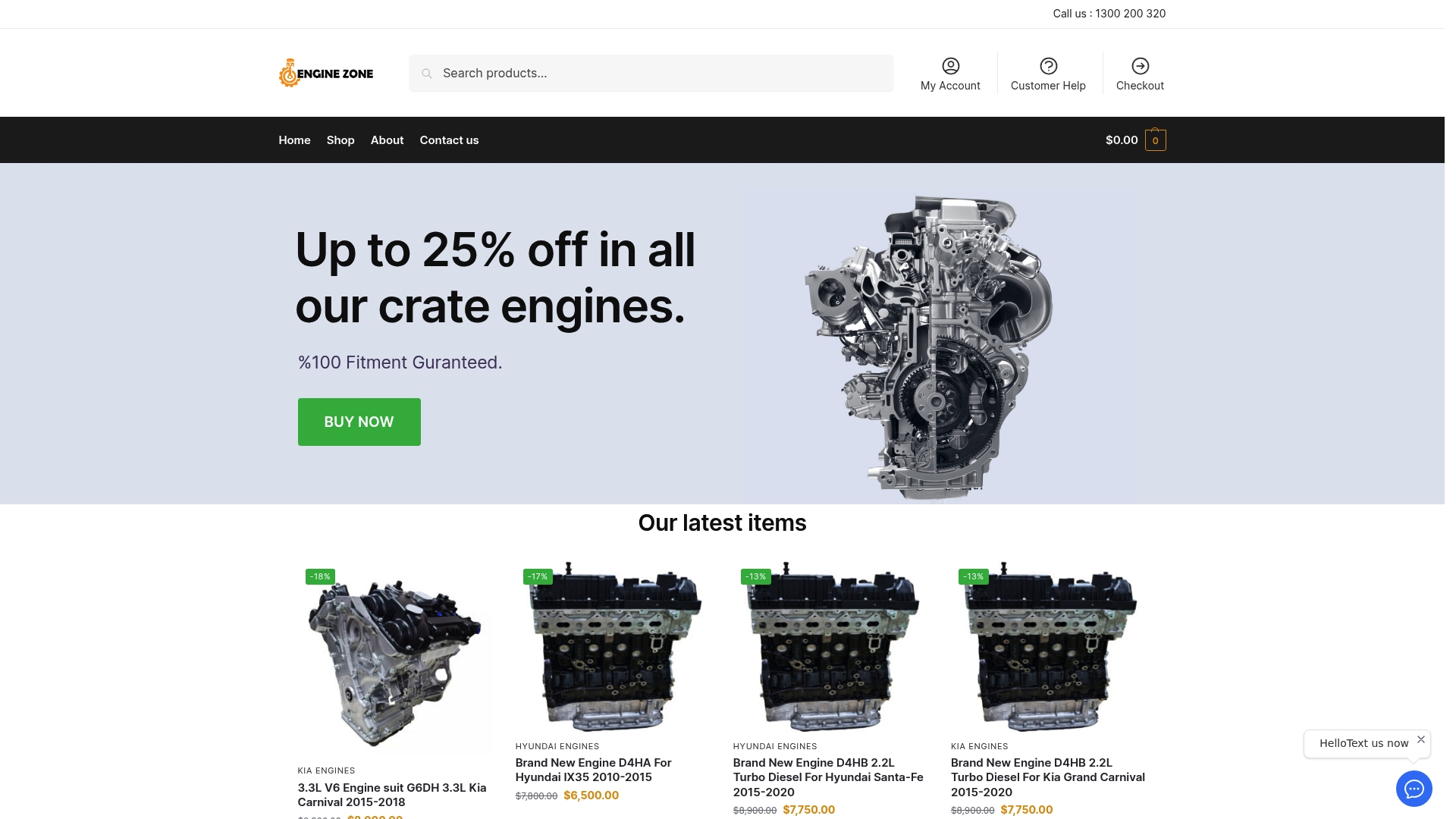
Engine Zone specialises exclusively in Hyundai and Kia engines for Australian owners, which means every product in the catalogue is matched to specific models and years. Whether you need a 1.4L petrol engine for Kia Rio or a 2.0L petrol engine for Kia Cerato, each engine comes tested, guaranteed for fitment, and backed by warranty coverage. Pricing is transparent, discounts of up to 25% are available, and free shipping is included across Australia. The team also provides model fitment assistance so you order the right engine the first time, without the costly mistake of an incompatible part arriving at your workshop door.
Frequently asked questions
Is engine replacement cheaper than buying a new Hyundai or Kia?
Yes. Engine replacement typically costs $4,000 to $7,000, compared to a new car average of $49,275 in Australia. That is a saving of over $40,000 before you account for interest, insurance, and depreciation.
What warranty can I expect with a remanufactured engine?
Remanufactured engines typically come with a 3-year/36,000-mile warranty covering OEM-level performance and parts, which is comparable to what you would expect from a new vehicle powertrain.
Are there special considerations for Hyundai and Kia owners in Australia?
Yes. Before paying for any engine repair, check whether your vehicle is covered by class action eligibility for engine defects affecting approximately 194,000 Hyundai and Kia vehicles in Australia. Also keep all service records to support any warranty claims.
Should I get multiple quotes before replacing my engine?
Absolutely. Labour rates vary significantly between workshops, and some shops price high to discourage the job. Getting three or more quotes gives you a realistic picture of fair market pricing and protects you from overpaying.