
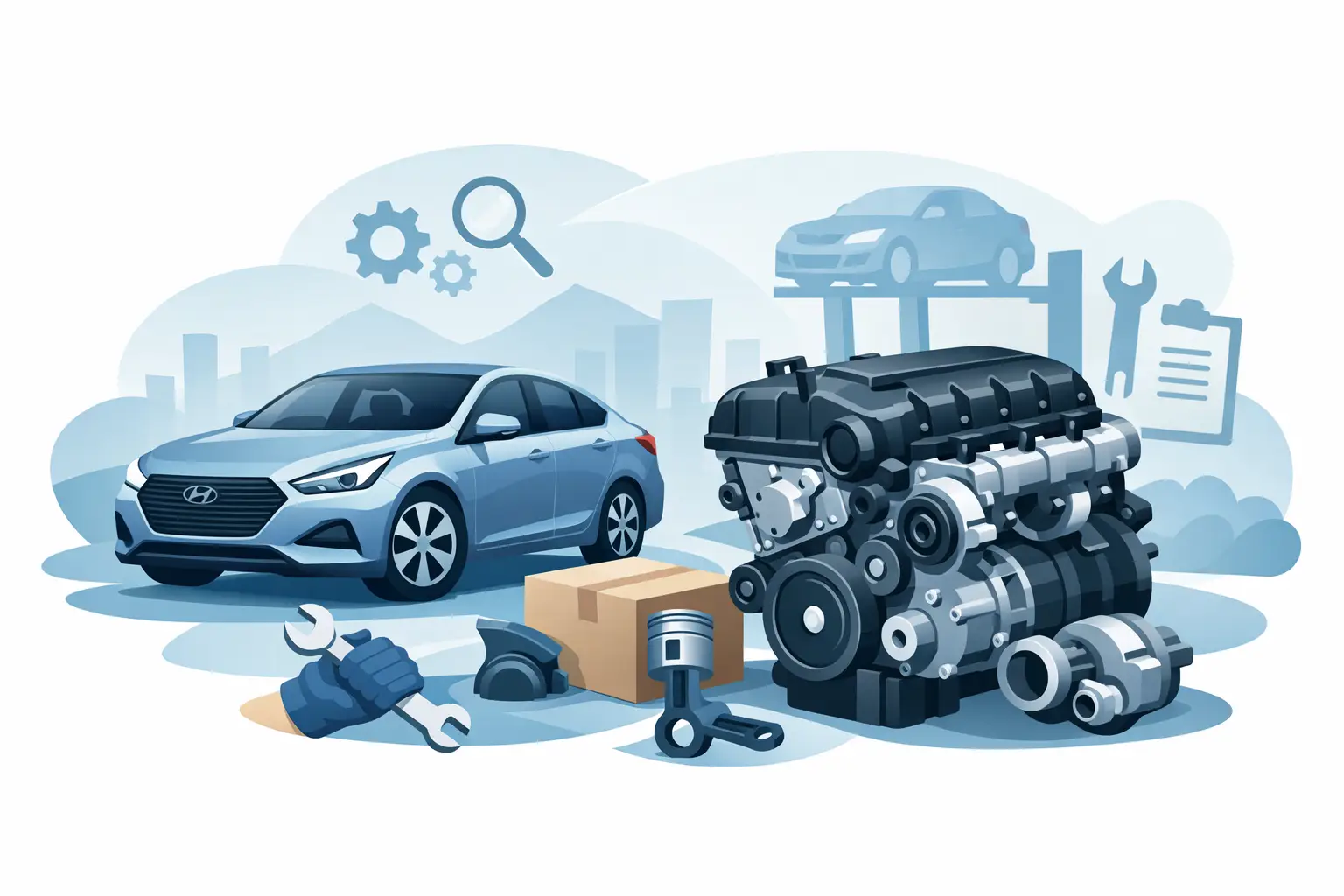
A replacement engine is not the sort of part you want to guess on. This Hyundai replacement engine buying guide is built for Australian drivers, workshops and trade buyers who need the right engine the first time, without wasting days on wrong fitment, vague listings or hard-to-check compatibility.
For most buyers, the real question is not just which engine is cheap. It is whether the engine matches the vehicle properly, arrives quickly, and gives you enough confidence to fit it and move on. When a Hyundai is off the road, every wrong turn costs time and money.
Hyundai replacement engine buying guide – start with the engine code
The engine code matters more than the model badge on the boot. A Hyundai ix35, Santa Fe or Elantra may have different engine options across year ranges, fuel types and drivetrain setups, and two vehicles that look identical can still require different engines.
Before you buy, confirm the engine code from the vehicle itself. That usually means checking the compliance details, existing engine markings, VIN-related information, or workshop records. If you order by model name alone, you increase the risk of ending up with an engine that is close, but not correct enough to fit without extra work.
This is where many buyers come unstuck. They search for a replacement engine for a Hyundai Getz or Santa Fe, find a listing that seems right, and assume all engines in that series are interchangeable. Sometimes they are. Often they are not. A good supplier will help verify the code, application and year range before the order is locked in.
Match the vehicle, not just the badge
A proper match comes down to a few key details working together. Engine code is first. After that, you need to consider fuel type, vehicle year, transmission compatibility where relevant, and whether the engine is naturally aspirated or turbo diesel.
For example, petrol and turbo diesel Hyundai engines are not a simple swap based on physical size or mounting points. Likewise, a 4-cylinder option and a V6 option in the same broader model family are completely different purchases with different cost, labour and fitment considerations.
If you are buying for a customer vehicle or workshop job, take an extra minute to verify the exact application. It is much easier to confirm fitment up front than to deal with freight, downtime and reinstall delays later.
Common Hyundai applications buyers ask about
Australian buyers often search for replacement engines for the Hyundai ix35, Santa Fe, Elantra and Getz. These are popular vehicles, but they span enough years and engine variants that broad searching can create confusion.
The smarter approach is to narrow the job quickly. Start with the vehicle model and year, then match the engine code, then confirm whether you need petrol or diesel. Once those basics line up, the buying process becomes much more straightforward.
New crate engine or rebuild – which makes more sense?
This is where budget and downtime usually decide the direction. A rebuild can make sense if the original engine is suitable for machining, parts availability is strong, and the workshop schedule allows for extra strip-down and inspection time. But rebuilds can also grow legs. Once internal damage is found, the quote can move fast.
A brand new replacement engine is often the cleaner option when reliability and turnaround matter most. You know what you are buying, you avoid many of the unknowns tied to a damaged core, and fitment is simpler when the engine is listed clearly for a specific application. For owners of older Hyundai vehicles, this can be a practical way to extend the life of the car without stepping into new-car pricing.
There is no single answer for every job. If the vehicle has sentimental value, fleet importance or daily-use urgency, buying a new replacement engine usually delivers more certainty. If the car is lower value and labour cost is less of a concern, a rebuild may still be worth pricing. What matters is being realistic about hidden costs, not just the headline figure.
What to check before you buy
A solid listing should tell you more than the engine family name. You want enough detail to buy with confidence, especially if you are ordering online.
Look for clear vehicle compatibility, engine code references, fuel type, and whether the engine is brand new. If those details are thin, ask questions before payment. A high-value mechanical purchase should not feel vague.
You should also check what buying assurance comes with the engine. Fitment guarantee, warranty support, secure checkout and delivery terms all matter. These are not extras. They are part of reducing risk on a major component purchase.
Fitment guarantee is not marketing fluff
If a supplier offers a 100% fitment guarantee, that should mean they are confident in the matching process and prepared to help confirm the right engine before dispatch. That matters because freight on engines is not a small issue, and incorrect orders can be expensive to undo.
For workshops and trade buyers, this is even more important. One wrong engine can hold up a hoist, delay handover and create avoidable friction with the customer. Good fitment support saves more than money. It protects time.
Price matters, but value matters more
Everyone wants a fair price, especially when engine replacement is being weighed against replacing the whole vehicle. But the cheapest listing is not always the best buy.
A lower upfront price can hide weak support, uncertain compatibility or unclear warranty terms. On the other hand, a competitively priced engine backed by specialist guidance, secure payment and Australia-wide shipping usually gives better overall value. If there is a discount on listed pricing as well, that can make a new engine option even more attractive compared with a drawn-out rebuild.
Think about the full cost of the job. That includes labour, fluids, gaskets, workshop scheduling, freight timing and the cost of the vehicle staying off the road. Saving a small amount on the engine itself means very little if the purchase creates delays or fitment issues.
Why specialist suppliers usually make the process easier
When a supplier focuses on Hyundai and Kia applications rather than every make under the sun, the buying process tends to be faster and clearer. Listings are more relevant, model matching is tighter, and support conversations get to the point quickly.
That specialist focus is useful when you are comparing multiple engine codes or trying to confirm a less obvious year-range variation. Instead of explaining the basics from scratch, you are speaking with people who already know the common Hyundai applications and the mistakes buyers usually make.
That is one reason many customers choose a specialist business like Engine Zone. The process is built around practical certainty – correct fitment, expert support, secure checkout and delivery across Australia – rather than making buyers sort through unrelated parts.
Hyundai replacement engine buying guide for workshops and trade buyers
Trade buyers usually have a slightly different checklist from private owners. They still care about price, but they are often just as focused on turnaround, paperwork clarity and making sure the engine lands ready for the next stage of the job.
If you are buying for a workshop, confirm availability and dispatch timing early. Ask the fitment questions before the invoice is raised, not after. Keep the engine code, vehicle year and fuel type in the job file so there is no confusion between front counter, parts ordering and workshop floor.
For rebuilders and mechanical businesses, consistency matters. A supplier that can provide the right Hyundai engine range repeatedly is worth more than one-off bargain chasing.
Delivery, support and warranty are part of the purchase
An engine is not like ordering filters or brake pads. Delivery needs to be handled properly, and support matters if you need to clarify something before installation.
Free Australia-wide shipping can make a big difference, particularly for regional buyers and workshops outside metro areas. It simplifies quoting and removes one of the common cost surprises that appears late in the buying process.
Warranty support also deserves a proper look. Read the terms, understand the installation expectations, and make sure your workshop follows the required process. Warranty is there to give confidence, but it works best when the buying and fitting steps are handled correctly from day one.
If you are replacing a tired Hyundai engine, the best result usually comes from getting the basics right early – exact code, exact application, clear support and no guesswork. Buy with enough certainty that once the engine arrives, the job can move forward without drama. That is what gets the vehicle back on the road sooner, with fewer surprises.