
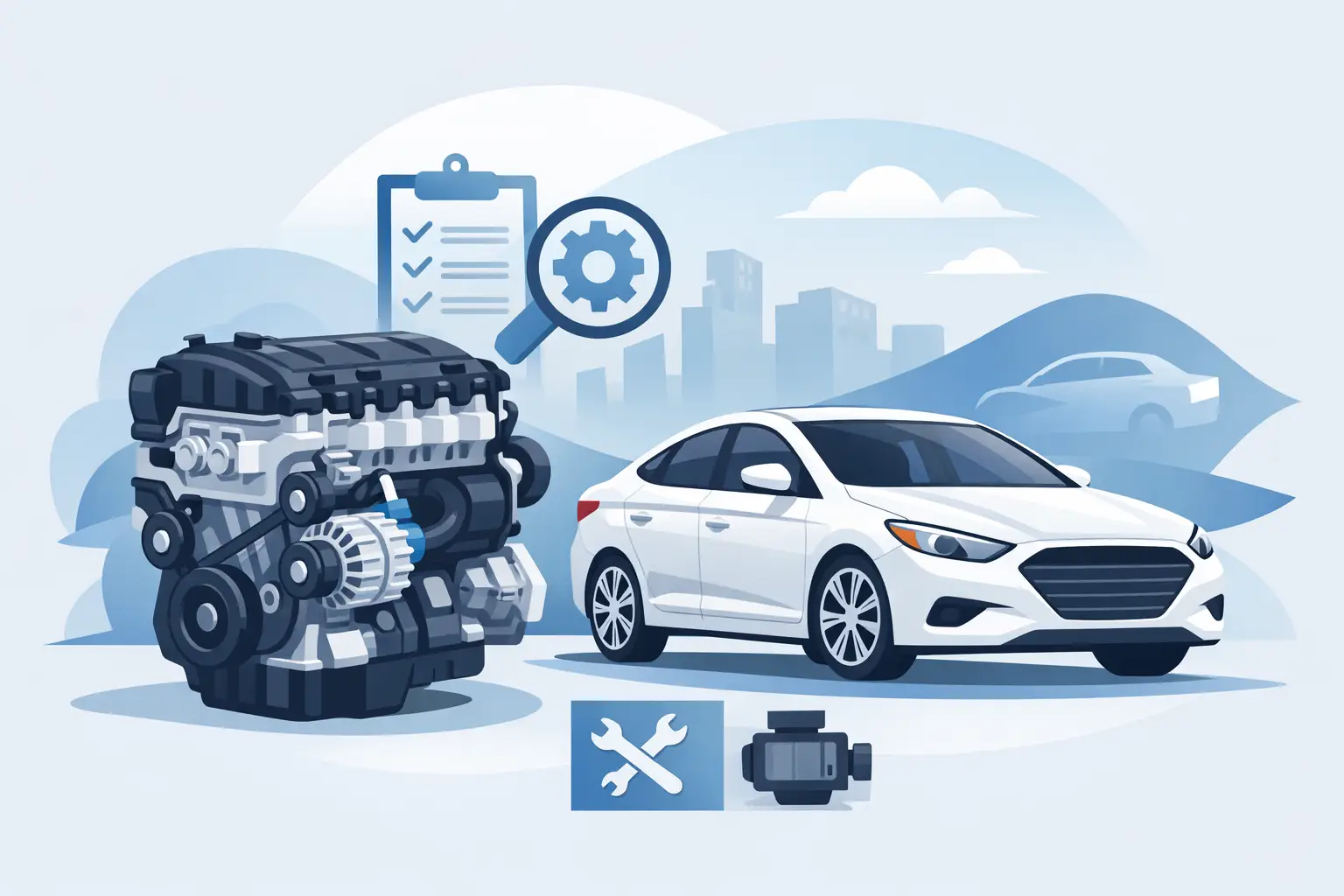
When a Hyundai starts using oil, knocking on cold start or loses compression altogether, most buyers are not looking for theory – they want the right replacement engine, fast. This G4NC engine buyer guide is built for that exact moment. If you are replacing a failed engine in an ix35, Tucson or another Hyundai application, the main job is simple: confirm the right code, avoid fitment mistakes and buy with enough certainty that the vehicle goes back on the road without extra drama.
What the G4NC engine is
The G4NC is a 2.0-litre petrol four-cylinder from Hyundai’s Nu engine family. In the Australian market, it is commonly found in Hyundai passenger and SUV applications, depending on model year and specification. On paper, that sounds straightforward. In practice, buyers often get caught by assuming any 2.0-litre Hyundai engine will do the job.
That is where replacements go wrong. Engine families can look similar across listings, but sensors, ancillaries, intake layouts and compatibility by build date can vary enough to turn a quick swap into a workshop headache. If you are ordering a crate engine, the code matters more than the broad engine size.
G4NC engine buyer guide – what to confirm first
Before you compare price, freight or warranty, confirm the engine code from the vehicle itself. Do not rely on registration details alone, and do not assume that a dealer-serviced car still has its original engine. The safest path is to match the code stamped on the engine and cross-check it against the vehicle’s VIN, model, year range and transmission setup.
For most buyers, there are four practical checks that matter. First, confirm the engine code is genuinely G4NC. Second, confirm the vehicle application and build date. Third, ask whether the replacement is supplied as a long motor or with additional components. Fourth, make sure the supplier can support fitment questions before and after purchase.
Those checks sound basic, but they prevent the most expensive mistakes. Saving a few hundred dollars on the wrong engine is no saving once labour, downtime and return freight are added.
Why engine code matters more than model name
Many Hyundai models were sold with more than one engine option across the same generation. A buyer might search by model name alone and land on a listing that looks close enough. That is risky. The same badge on the tailgate does not guarantee the same engine under the bonnet.
A proper match starts with the engine code, then works outward to the model and year. If the supplier leads with exact fitment, that is a good sign. If the listing is vague and pushes the buyer to “check photos”, that is usually where trouble starts.
Which vehicles may use a G4NC
Depending on market and build period, the G4NC may appear in Hyundai applications such as the ix35 or Tucson and some passenger models using the 2.0-litre Nu petrol platform. The key word is may. Australian-spec vehicles can differ from overseas examples, and online forum advice often mixes markets together.
That is why local fitment support matters. An engine that suits a North American or Korean-market car may not match an Australian-delivered vehicle without changes. For workshops and trade buyers, this is often the difference between a smooth install and a bay tied up for days chasing parts.
Common buying traps with G4NC replacements
The most common trap is buying by engine size instead of engine code. The second is assuming all supplied engines include the same accessories. Some replacements are sold as bare long motors, while others may include selected bolt-on components. If you do not clarify what is included, you can end up transferring more parts than expected or ordering missing items separately.
Another trap is underestimating the value of fitment support. Engine replacement is not like ordering filters or brake pads. If there is a mismatch, the cost is measured in labour hours, workshop disruption and lost use of the vehicle. A supplier that offers a fitment guarantee and clear support reduces that risk considerably.
Price-only shopping can also backfire. A cheap engine with unclear history, poor packaging or no practical after-sales support can cost more than a properly matched premium replacement. For most owners, mechanics and rebuilders, certainty is worth more than chasing the lowest figure on screen.
How to assess a G4NC engine listing
A good listing should tell you exactly what engine code you are buying, the compatible Hyundai models or year range, the condition of the engine and what is included. It should also make warranty coverage easy to understand rather than hiding it in vague wording.
You also want to see confidence from the supplier. That means clear answers on fitment, realistic delivery timeframes and secure checkout. For Australian buyers, Australia-wide shipping matters because many replacement engine purchases are urgent. Once a car is off the road, every extra day becomes expensive or inconvenient.
If the listing is built around Hyundai and Kia applications rather than being one small part of a huge general catalogue, that tends to be a positive sign. Specialist suppliers usually make model matching faster because they deal with these applications every day.
New replacement engine or used import?
This depends on budget, intended ownership period and risk tolerance. A used engine can look attractive upfront, but it may come with unknown wear, inconsistent service history or limited support. That can work in some situations, especially on lower-value vehicles, but it is not always the low-risk option it first appears to be.
A brand new replacement engine generally suits buyers who want stronger buying assurance, cleaner installation planning and fewer unknowns. For workshops, that can also mean fewer call-backs and less time spent explaining uncertainty to customers. If the vehicle still has plenty of life left in it, paying for certainty often makes sense.
What workshops and trade buyers should ask
Trade buyers usually move faster because they know what can go wrong. Even so, it is worth confirming whether the engine is supplied in crate form, what pre-delivery checks have been completed and whether there are any application notes specific to the model. Small details can save a lot of time once the engine arrives.
It is also smart to confirm freight handling and delivery timing before committing. A well-priced engine is less helpful if it sits in transit while the vehicle occupies workshop space. Fast, Australia-wide shipping is not just a convenience – it is part of the job when downtime is already costing money.
For this reason, many buyers prefer dealing with a specialist supplier such as Engine Zone, where Hyundai and Kia fitment is the core focus rather than an afterthought. That narrower focus usually means clearer listings, quicker answers and less guesswork at checkout.
Is a G4NC replacement worth it?
Usually, yes – if the rest of the vehicle is sound. For many Hyundai owners, replacing the engine is still far more cost-effective than replacing the whole car, especially when body, transmission and interior condition are otherwise decent. That is often true for family SUVs and daily drivers where the owner knows the vehicle’s history and wants a reliable fix rather than starting again with another used car.
The numbers become less favourable if the vehicle already has multiple major issues or if repair costs are stacking up across other systems. That is the part no honest buyer guide should ignore. A replacement engine is a strong solution, but it works best when the vehicle still has enough value and service life left to justify the spend.
Final checks before you buy
Right before purchase, make sure the engine code is confirmed, the vehicle details have been checked, the included components are clear and the warranty terms are understood. If any of that feels vague, pause and ask. Good suppliers would rather answer a few extra questions than sort out a wrong order later.
A G4NC engine purchase should not feel like a gamble. With the right code, the right support and a proper fitment check, it becomes a straightforward parts decision instead of a costly guessing game. When the goal is getting a Hyundai back on the road without wasted time, clarity beats cheap shortcuts every time.