

Getting the wrong replacement engine fitted to your Hyundai or Kia is an expensive mistake that can cost thousands in rework, lost workshop time, and voided warranties. Choosing the right replacement engine for your car means understanding far more than just the price tag. It requires matching engine codes, diagnosing the original failure, verifying fitment, and knowing exactly what your warranty does and does not cover. Whether you are a Hyundai i30 owner, a Kia Rio driver, or a fleet manager running a dozen Sportages, this guide walks you through every step so you get it right the first time.
Table of Contents
- Understanding your replacement engine options and requirements
- Diagnosing root causes and preparing your vehicle for replacement
- The installation process: ensuring fitment and avoiding common mistakes
- Post-installation checks and maintaining your replacement engine
- Understanding warranties and consumer rights in Australia
- Why looking beyond price and warranty terms matters when choosing your replacement engine
- Find quality replacement engines and expert support at Engine Zone
- Frequently asked questions
Key Takeaways
| Point | Details |
|---|---|
| Understand engine types | Know the pros and cons of new, rebuilt, and used replacement engines and their warranty differences. |
| Diagnose fully | Thoroughly identify and fix the root cause of engine failure before replacement to protect your investment and warranty. |
| Ensure correct fitment | Match engine code and vehicle details and choose suppliers offering fitment guarantees to avoid installation issues. |
| Professional installation matters | Use professional installers and follow warranty conditions to maintain coverage and prevent damage. |
| Australian consumer protections | Your rights under Australian Consumer Law complement warranties, offering additional safeguards for engine buyers. |
Understanding your replacement engine options and requirements
To choose properly, first understand your engine options and their implications. Replacement engines for Hyundai and Kia vehicles generally fall into three categories, and each comes with a different risk and reward profile.
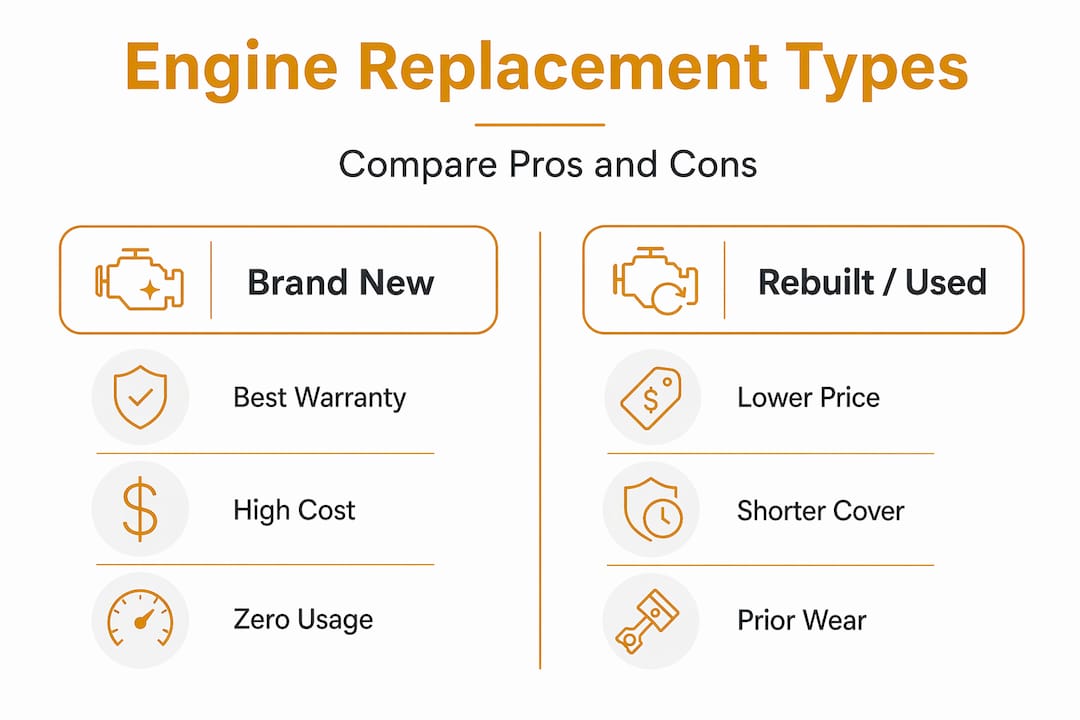
Brand new engines are manufactured to original specification and have zero prior use. They offer the strongest warranty coverage and the most predictable service life. As a general rule, a brand new replacement engine offers the strongest warranty position because the engine has not already lived an unknown life. For owners who want to keep a vehicle running for another five or more years, new is almost always the right call.
Rebuilt engines sit in the middle ground. A quality rebuild using genuine or OEM-spec components can be excellent value, but the outcome depends entirely on who did the work and which parts were used. A poorly rebuilt engine with worn rings or a re-used crankshaft is a gamble, not a bargain.
Used engines pulled from wreckers are the most budget-friendly option upfront. They typically carry shorter warranties and come with an unknown service history. For a vehicle that only needs to run for another 12 months, this may be acceptable. For anything longer, the risk rarely justifies the saving.
Regardless of which type you choose, matching the engine to your specific vehicle is non-negotiable. You need to verify the engine code, cross-reference the VIN (Vehicle Identification Number), and confirm the build year and variant. A brand new engine for Kia Rio models, for example, requires matching the G4LC engine code precisely to the 2015 to 2019 build range.
| Engine type | Warranty strength | Cost | Predictability |
|---|---|---|---|
| Brand new | Strongest | Highest | Very high |
| Rebuilt | Moderate | Mid-range | Variable |
| Used/wrecker | Weakest | Lowest | Low |
Key requirements for correct fitment include:
- Engine code matching (e.g. G4LC, G4FJ, D4FB)
- VIN verification to confirm the exact variant
- Build year and series confirmation
- Transmission compatibility check
- Ancillary component compatibility (mounts, sensors, wiring loom)
Diagnosing root causes and preparing your vehicle for replacement
Knowing your options is crucial, but success depends on thoroughly preparing your vehicle before replacement. Fitting a new engine into a car that still has the fault that destroyed the original is the single most common and costly mistake in the engine replacement process.
Replacement engine warranties commonly exclude issues caused by poor installation, overheating, oil starvation, or failure to address the root cause of the original engine failure. That means if your Hyundai Tucson blew its engine due to a blocked oil pickup, and you fit a new engine without cleaning the oil system, you will almost certainly destroy the second engine and have no warranty recourse.
Before any new engine goes in, work through this diagnostic checklist:
- Cooling system — Pressure test the radiator, inspect the water pump, thermostat, and hoses. A single failing hose can overheat a brand new engine within minutes.
- Oil supply system — Check the oil pump, pickup tube, and sump for sludge or debris. Flush the system thoroughly.
- Turbocharger (if applicable) — On turbocharged Kia and Hyundai models, inspect the turbo oil feed and return lines. A worn turbo can push debris into a new engine.
- Fuel injectors — Leaking or dirty injectors can wash cylinder walls and accelerate wear from day one.
- ECU and sensors — Faulty MAF sensors, oxygen sensors, or coolant temperature sensors can cause the engine to run incorrectly and damage itself.
- Timing components — Replace the timing belt or chain, tensioners, and idler pulleys as a matter of course.
Pro Tip: Take photos of every component you inspect and replace before installation. This documentation is your best defence if you ever need to make a warranty claim. Suppliers and insurers respond far better to evidence than to assertions.
The installation process: ensuring fitment and avoiding common mistakes
With preparation done, now follow a thorough installation procedure to secure fitment and warranty. Even a perfect engine can fail quickly if it is installed incorrectly, and a warranty will not cover mistakes made on the workshop floor.

Start by verifying the engine code stamped on the block against your order confirmation and vehicle VIN. Do not assume the engine is correct because the box looks right. Engine warranty outcomes depend heavily on professional installation and addressing fitment through VIN and engine code matching to avoid delays and compatibility issues.
A supplier offering a 100% fitment guarantee is telling you something important: they have done the compatibility work on their end, but the guarantee only holds when you provide accurate vehicle details upfront. If you give the wrong build year or omit a variant code, the guarantee cannot protect you.
Common installation mistakes to avoid:
- Reusing old gaskets on the intake manifold, exhaust manifold, or coolant passages
- Skipping the engine flush before first start-up
- Incorrect torque settings on head bolts, main bearing caps, or flywheel bolts
- Not priming the oil system before cranking the engine
- Leaving old coolant in the system, which can contaminate the new engine
Pro Tip: Before starting the engine for the first time, crank it with the fuel pump fuse removed for 10 to 15 seconds. This primes the oil galleries without firing the engine, dramatically reducing wear on initial start-up.
| Installation approach | Warranty validity | Risk level | Recommended for |
|---|---|---|---|
| Professional workshop | Maintained | Low | All vehicle types |
| Experienced DIY with documentation | Often maintained | Moderate | Experienced mechanics |
| Inexperienced DIY | Likely voided | High | Not recommended |
Use the engine fitment guide for Kia Rio as a reference point for understanding the level of detail required during installation verification.
Post-installation checks and maintaining your replacement engine
After installing the engine, regular maintenance and checks are key to long-term success. The first 1,000 kilometres are the most critical period for any replacement engine.
Follow this sequence after installation:
- Check all fluid levels before first start: oil, coolant, and brake fluid.
- Start the engine and let it idle for five minutes. Watch for oil pressure warning lights, unusual noises, or coolant temperature spikes.
- Check for leaks around all gasket surfaces, oil filter, and coolant hoses while the engine is warm.
- Road test gently for the first 500 km. Avoid hard acceleration, high revs, or towing during the break-in period.
- Change the oil and filter at 500 km to remove any metal particles from the break-in process.
A supplier may require proof of professional installation and correct fluids and servicing to keep the replacement engine warranty valid. Keep every receipt, including the workshop invoice, oil purchase, and filter purchase.
Ongoing maintenance items to stay on top of:
- Oil changes every 10,000 km or per the manufacturer’s schedule, whichever comes first
- Coolant flush at 12 months or 30,000 km
- Air filter replacement every 20,000 km
- Spark plugs at the manufacturer’s recommended interval
- Timing belt or chain inspection at each major service
Pro Tip: Keep a dedicated service folder for the replacement engine, separate from the general vehicle logbook. Include the engine serial number, installation date, and all subsequent service records. If you ever sell the vehicle or need to make a warranty claim, this folder is worth its weight in gold.
Watch for early warning signs: oil consumption above 500 ml per 1,000 km, coolant loss with no visible leak, white smoke on start-up, or a persistent ticking noise at idle. Address these immediately rather than waiting for the next service.
Understanding warranties and consumer rights in Australia
Understanding your legal protections completes the picture of secure engine replacement. Many buyers focus entirely on the supplier’s warranty terms without realising they have additional protections under Australian law.
Under Australian Consumer Law, products come with automatic guarantees that cannot be taken away by warranty exclusions, but voluntary warranties often have additional conditions requiring care and correct installation. This means even if a supplier’s warranty excludes a particular failure, you may still have a remedy if the engine was not fit for purpose or did not match its description.
Practical points to understand:
- Automatic guarantees apply to all goods sold in Australia, regardless of what the warranty document says
- Voluntary warranties from suppliers add to your rights, not replace them
- Exclusion clauses in supplier warranties are still subject to consumer law and cannot strip away your basic protections
- Full disclosure when purchasing matters: provide accurate vehicle details and be honest about the engine’s intended use
- Document everything: installation invoices, fluid receipts, and service records all support a warranty claim
“Under Australian Consumer Law, products come with automatic guarantees that cannot be taken away by warranty exclusions, but voluntary warranties often have additional conditions requiring care and correct installation.” — ACCC
When reviewing replacement engine warranty terms, look specifically for exclusions around installation method, fluid type, and root cause diagnosis. A warranty that requires professional installation is not trying to make your life difficult. It is protecting both parties from a failure that had nothing to do with the engine itself.
Why looking beyond price and warranty terms matters when choosing your replacement engine
Here is an uncomfortable truth that most engine buyers learn the hard way: the cheapest engine with the longest warranty is often the worst choice. Price and warranty length are easy to compare. What is harder to measure is supplier knowledge, fitment accuracy, and the quality of support you receive when something goes wrong.
We have seen fleet operators buy the lowest-priced engine available, only to spend twice the original saving on rework because the supplier had no real knowledge of Hyundai and Kia engine variants. The Kia Sportage alone has used multiple engine codes across its generations, and confusing a D4HA with a D4HB is an easy mistake for a generalist supplier. A specialist who knows these vehicles intimately is worth paying a small premium for.
The right replacement motor warranty gives confidence only when combined with correct fitment, honest terms, solid support, and thorough preparation. That combination is rarer than it should be. For fleet operators specifically, the answer is to enforce a documented installation protocol across all workshops you use. Require a signed installation checklist, photos of the engine code verification, and a copy of the workshop invoice with every engine replacement. This single process change reduces repeat failures and warranty disputes significantly.
For private owners, the lesson is simpler: buy from a supplier who specialises in your brand, not one who happens to stock your engine alongside ten thousand other parts. Specialist knowledge about Hyundai and Kia engine variants is not a marketing line. It is the difference between an engine that fits perfectly and one that arrives with the wrong sensor port or an incompatible mounting bracket.
Find quality replacement engines and expert support at Engine Zone
Now that you know what to look for, here is a trusted source to get the right engine with confidence.
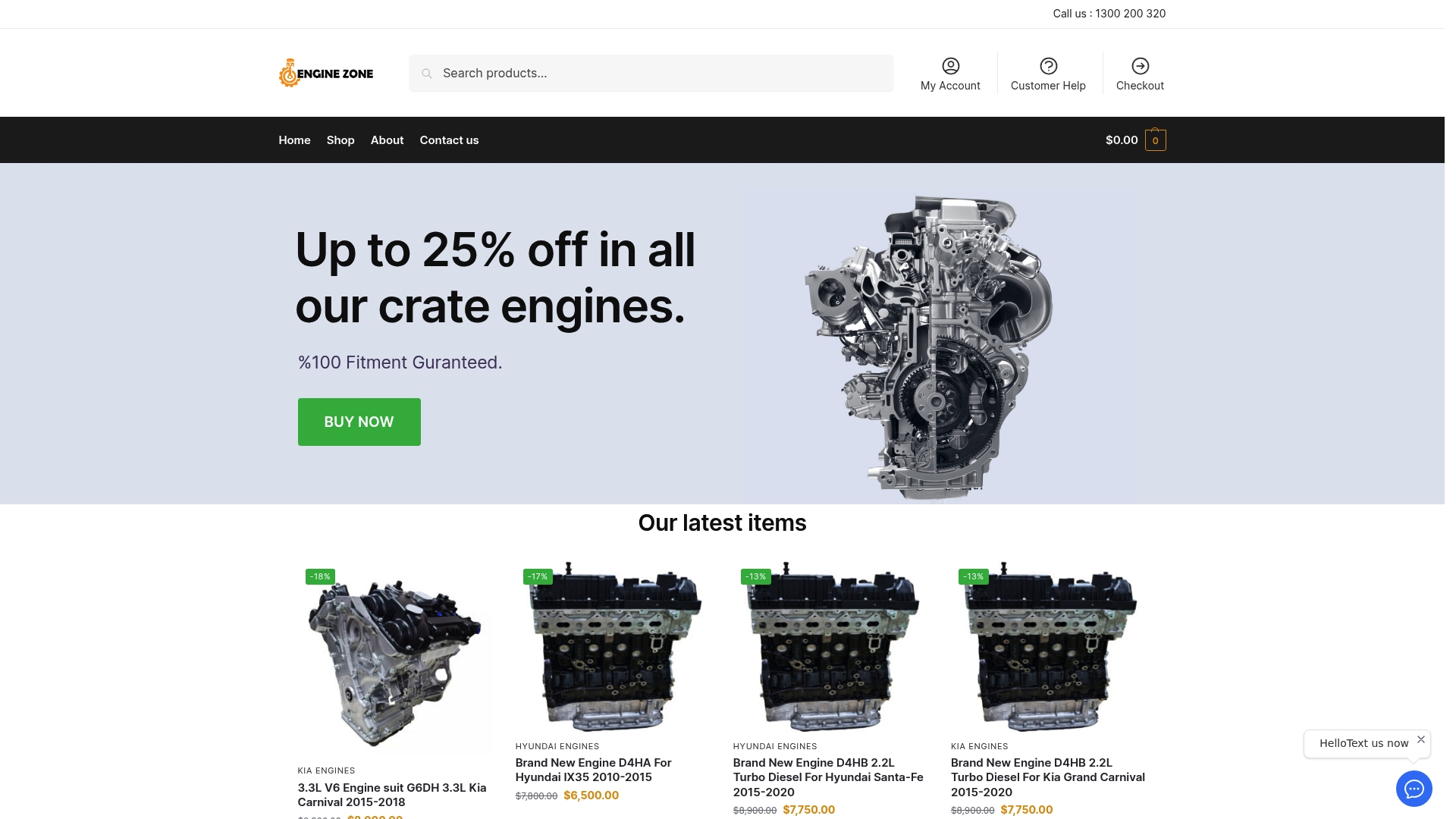
Engine Zone specialises exclusively in Hyundai and Kia replacement engines for Australian customers, with fitment guarantees, clear warranty terms, and fast delivery across the country. Whether you are a private owner replacing a blown motor, a workshop fitting engines weekly, or a fleet operator who cannot afford downtime, the team at Engine Zone provides the fitment support and documentation guidance you need. Browse the brand new 1.4L Kia Rio engine and the full range of Hyundai and Kia motors at Engine Zone, where specialist knowledge backs every sale.
Frequently asked questions
What types of replacement engines are best for Hyundai and Kia vehicles?
Brand new engines provide the strongest warranty and reliability because they have not already lived an unknown service life. Rebuilt or used engines may cost less but typically offer shorter or more limited warranty coverage.
Why is diagnosing the root cause of engine failure important before replacement?
If underlying issues like cooling system faults or oil starvation are not fixed before installation, the new engine can fail in the same way. Warranty claims may be denied when the root cause of the original failure was not addressed.
Can I install a replacement engine myself and still keep the warranty?
Most warranties require professional installation and proof of correct procedures to remain valid. Improper installation risks both engine damage and complete loss of warranty coverage.
What consumer protections do I have in Australia when buying a replacement engine?
Australian Consumer Law gives automatic guarantees that the product will work as intended, which apply alongside but cannot be replaced by supplier warranties.
How can I ensure the replacement engine fits my specific Hyundai or Kia model?
Verify your engine code, VIN, and full vehicle details with your supplier before ordering. A supplier offering a 100% fitment guarantee reduces the chance of ordering the wrong engine and losing time during installation.